



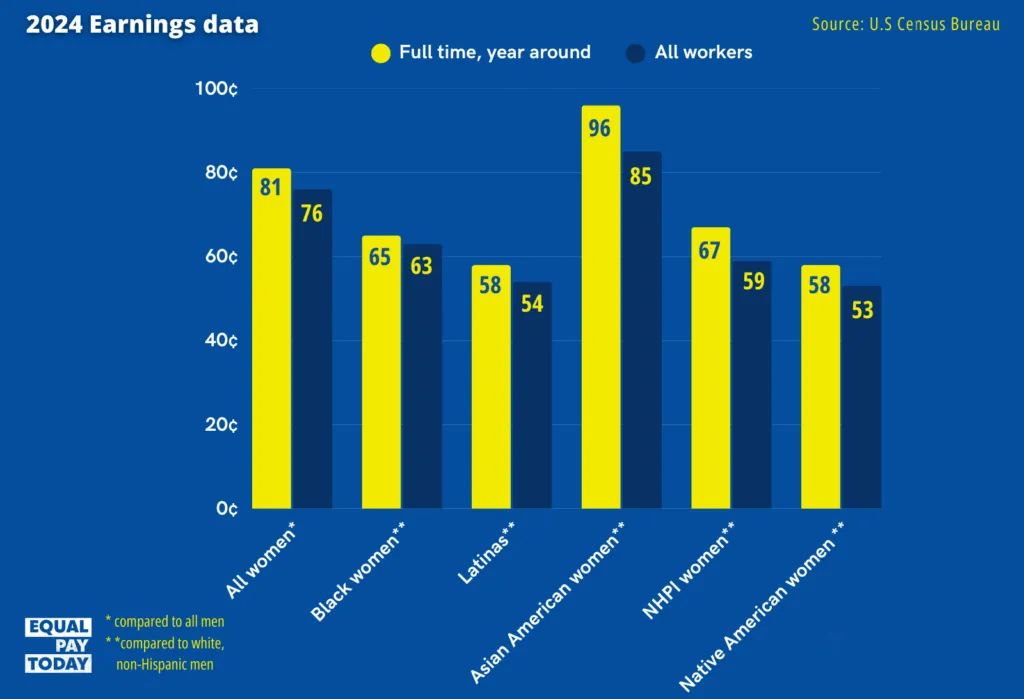

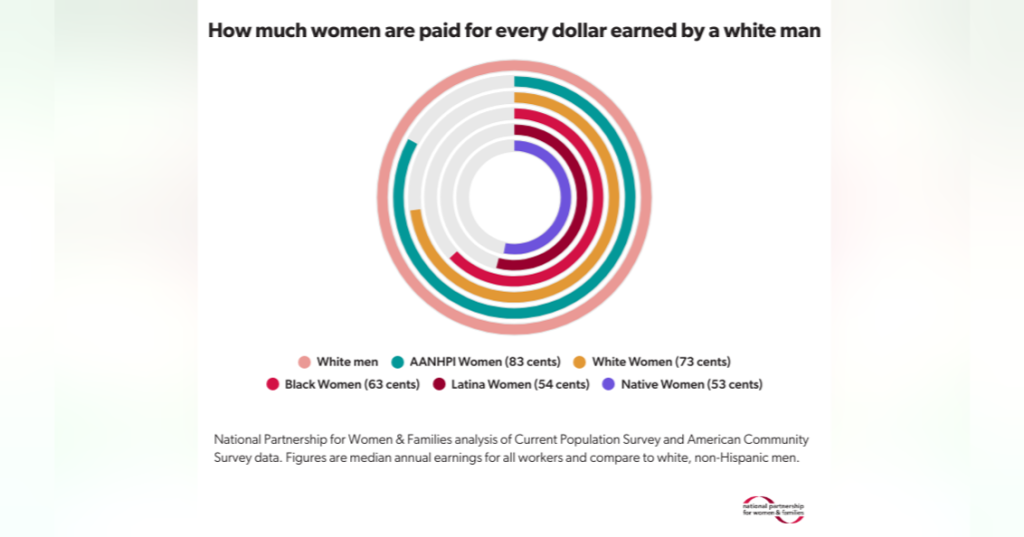
Happy equal pay day, y’all – (math is required) March 26th is the day that female worker’s wages earned to date in this year can be added to all the wages they earned last year to match male worker’s wages last year.
Sit with that for a moment. Then do some math with me. It’s a story problem. If those wig you out – not to worry – I will post the answer below in the first comment. Here’s the problem.
_________________________
Betsy and Bob work the same job, for the same pay, but Betsy works 3 months longer than Bob. They each make the average US-based salary for their under 40 age bracket, have monthly bills totaling $2500, and their take home pay over the span of their work year is $40,000.
Betsy’s work year is 15 months long. Bob’s is 12.
Q1: How much is each worker’s monthly take-home pay?
They each have the goal to buy a home, and are saving for a down payment on a house. If they qualify for a first time buyer’s program at 4% of the selling price of the home, instead of 20% for a traditional loan, they could potentially buy a home before they are ready for retirement.
Q2: How long will each of them have to work to afford to buy a home with a value of $350,000 if they skimp on non-essential items and try to put away 10% of their salaries each month?
2 responses to “Happy Equal Pay Day!”
What just happened (this is the key insight)
The system is structurally unequal, even though:
Same job but monthly pay is lower – whether you compare the difference by number of months worked or annual 12 month salary.
Because:
Betsy’s “equal pay” income is spread over more months → lower monthly cash flow
Fixed expenses don’t adjust → they hit her much harder
Result:
Bob reaches homeownership ~5.5 years faster
Betsy is nearly financially stuck, despite earning the same total pay
The deeper takeaway is
Why poor people stay poor has a lot to do with how monthly liquidity matters and impacts ability to grow personal wealth. It isn’t from lack of trying, lack of innovation, or lack of motivation.
Systems can look relatively innocuous in their differences but hide inequities that produce very unequal outcomes
Here’s the math for why home-ownership has been impossible for GenX and Millenials and why those first time homebuyers programs are essential for community stability – more about how home ownership = community stability later. And yes, I know this idea that home ownership is stabilizing flies in the face of my stance on the downfall of the species due to the concept of territorial ownership. Get over it. “I contain multitudes”
Math:
A 20% down payment on a $350,000 house is:
$70,000
Q1: Monthly take-home pay
If each person takes home $40,000 over their full work year:
Betsy:
$40,000 ÷ 15 = $2,666.67 per month
Bob:
$40,000 ÷ 12 = $3,333.33 per month
Saving 10% each month
Betsy saves:
10% of $2,666.67 = $266.67 per month
Bob saves:
10% of $3,333.33 = $333.33 per month
How long to save $70,000
Betsy:
$70,000 ÷ $266.67 ≈ 262.5 months
That is about 21 years, 10.5 months
Bob:
$70,000 ÷ $333.33 ≈ 210 months
That is 17 years, 6 months
Final answer
Betsy
Monthly take-home: $2,666.67
Time to save enough: about 262.5 months, or about 21 years and 10.5 months
Bob
Monthly take-home: $3,333.33
Time to save enough: 210 months, or 17 years and 6 months